
The computers of highly sensitive Defence Research and Development Organisation have reportedly been hacked.

The missile positioned at launch pad-3 of the ITR swung in to action after getting signal from the radars to intercept a moving aerial target supported by an unmanned air vehicle (UAV) 'Banshee' over the Bay of Bengal, officials said.
With Prime Minister Narendra Modi stressing on the need for increasing arms exports, the Defence Research and Development Organisation has said India can sell combat aircraft and missiles whose production cost would be "much lower" than some of the weapons sold by countries such as China.
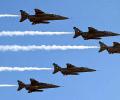
It involves India spending an estimated Rs 40,000 crores to Rs 50,000 crores and will take 10 to 15 years to develop.

Nibe Space (NSPL), a subsidiary of Nibe, announced its vision to establish India's first multi-sensor, all-weather, high-revisit Earth observation satellite constellation. Aiming to strengthen India's self-reliance in the strategically crucial defence-space sector, NSPL signed memoranda of agreement with Indian and global partners, including Larsen & Toubro, Centum, AgniKul, Skyroot Aerospace, SpaceFields, SISIR Radar, CYRAN AI Solutions, and Thales Alenia Space as a technology partner.
The Defence Science Forum invites participants for the National Essay Competition for students.
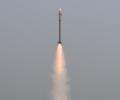
The MRSAM is an advanced path-breaking air and missile defence system that provides ultimate protection against a variety of aerial platforms. Defence experts say that it can shoot down enemy aircraft at a range of 50-70 km.
The DRDO has clearly decided that developing technologies is at least as important as developing weapons systems. V K Aatre, DRDO chief from 2000-04, had said, "Weapons programmes and technologies have to maintain equal pace." Only now is the DRDO heeding his advice.

'Government officials use Gmail and ordinary phones without basic security consciousness.' 'Interoperability, especially in joint exercises with countries like the US, worries me.' 'It often means we open our systems to them, but they don't reciprocate.' 'They could have kill switches in their systems and might even be able to affect ours.'

Kurulkar and 'Zara Dasgupta' were in contact through WhatsApp as well as voice and video calls, the chargesheet said.
Congress spokesperson Pawan Khera said the arrest of Kurulkar is a "very serious matter" and alleged that it exposes the "anti-national face" of the RSS.

'In today's launch, the 'Pralay' missile was tested for heavier payload and different range to prove the precision and lethality of the weapon'

Seeking the extension of police custody of Defence Research and Development Organisation (DRDO) scientist Pradeep Kurulkar, arrested on charges of providing confidential information to a Pakistani agent, the prosecution told a special court on Tuesday they have received the forensic report of devices seized from him and some images, videos and files that were deleted earlier have been retrieved now.
While there have been significant achievements in almost all disciplines, it must be appreciated that there is a definite capacity constraint in the Defence Research and Development Organisation. It is impossible for one DRDO to cater to the entire spectrum of products and services required by our three armed services.

The Indian Army is looking at deploying over 350 light tanks, mostly in the mountainous border areas.
Against the backdrop of long delays in its projects, the Government today asked the premier research agency Defence Research and Development Organisation to accelerate the work on its major military development programmes and complete them in time. The Cabinet Committee on Security headed by Prime Minister Manmohan Singh was briefed by the DRDO on its major projects including the futuristic Agni-6 and the recently launched Agni-5 long-range missile programmes.

The DRDO will set up five oxygen plants, out of the total 500 planned, in and around Delhi by this weekend, the defence ministry said.
India on Friday said it is developing a long-range nuclear-capable Agni-VI ballistic missile that would carry multiple warheads, allowing one weapon system to take out several targets at a time. "Agni-V is major strategic defence weapon. Now we want to make Agni-VI which would be a force multiplier," said Defence Research and Development Organisation chief V K Saraswat.
A look at some of the best technologies that DRDO has given India
The organisation has now turned to universities to tap talent at an early stage and wants the students to commit at least three years for research with defence laboratories.
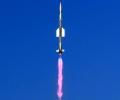
The quick reaction surface-to-air-missile missile developed by DRDO was test launched from the Integrated Test Range at Chandipur near here at about 3.08 pm from a vertical launcher against an electronic target at a very low altitude.

The defence ministry said the test-flight was carried out on Wednesday evening and it met all the trial objectives, validating the reliable performance, as confirmed from the data captured by a number of range sensors deployed at different locations.
Defence Minister A K Antony on Tuesday indicated a revamp of the Defence Research and Development Organisation, to give it capability to produce futuristic systems within the country."DRDO will have to play a crucial role in providing strategic defence with suitable delivery systems to the nation," Antony said. The DRDO and the end-users, the armed forces, would have to work with greater synergy to achieve the goal of self-reliance and minimise dependence on foreign nations.
The much-maligned DRDO has developed and implemented several new initiatives designed to make life easier for the Indian soldier stationed in high altitude areas, reports RS Chauhan

A land-attack version of the missile was test-launched from Launch Pad-3 of the Integrated Test Range (ITR). An air force variant was fired from an IAF fighter jet over Bay of Bengal.
It has been developing missiles and other state-of-the-art equipment for the armed forces, but the Defence Research and Development Organisation is now ready to take on the oldest human enemy -- mosquitoes -- that are vectors of diseases like malaria, and dengue with a new insect repellent cream.
Nearly 700 scientists have resigned from India's premier military research body Defence Research and Development Organisation in little less than six years from 2007, Defence Minister A K Antony said on Wednesday.

New Arjuns will fire anti-tank missiles; have extra armour protection

With new added technologies, including the control system, the missile was test-fired from the Integrated Test Range (ITR) launch pad-III at Chandipur around 10.45 am, said a source at the Defence Research and Development Organisation.
The Defence Research and Development Organisation (DRDO) has prepared the design of the aircraft while HAL is producing the engine and other parts.
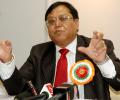
Saraswat played a key role in developing a series of missiles at a time when India faced tight international technology sanctions.
Under the next phase of missile development programme, the DRDO was working on Long Range Surface-to-air Missiles (LR SAM), which have a range of 70 km, with international collaboration, Prahlada said but declined to name the countries with whom the joint research will be done.
Marking a major step forward in technology development, India is expected to equip indigenously-built Dhruv helicopters with missiles in two years as part of an ambitious missile-development programme
State-run Kerala High-tech Industries Ltd (KELTEC) is all set to become part of the Indo-Russian joint venture cruise missile project, BrahMos Aerospace.
Scientists at the Leh-based Regional Research Laboratory have cross-bred the region's famous yaks with high yielding Swiss cows to produce a new breed, which can withstand extremely high altitudes.

The five-day event will include aerial displays by aircraft and helicopters along with a large exhibition and trade fair of aerospace and defence companies.
Observers of India's struggle to design and build defence equipment might wonder why the indigenous missile programme has been so much more successful than many other projects that the Defence Research and Development Organisation has taken up.
This is the first of a four-part series on the DRDO, which has instituted fundamental changes in the way it will approach equipment development.
 © 2026 Rediff.com - Advertise with us - Disclaimer - Privacy Policy - Sitemap - Feedback - About us - Terms of use - Grievances